

Message of the Week
The Little White Community Church
Scripture: 1st Timothy 5:1-8, 24-25
September 20, 2026
Message: “The Value of Doing What is Right!”
By Pastor George Gnade

Introduction:
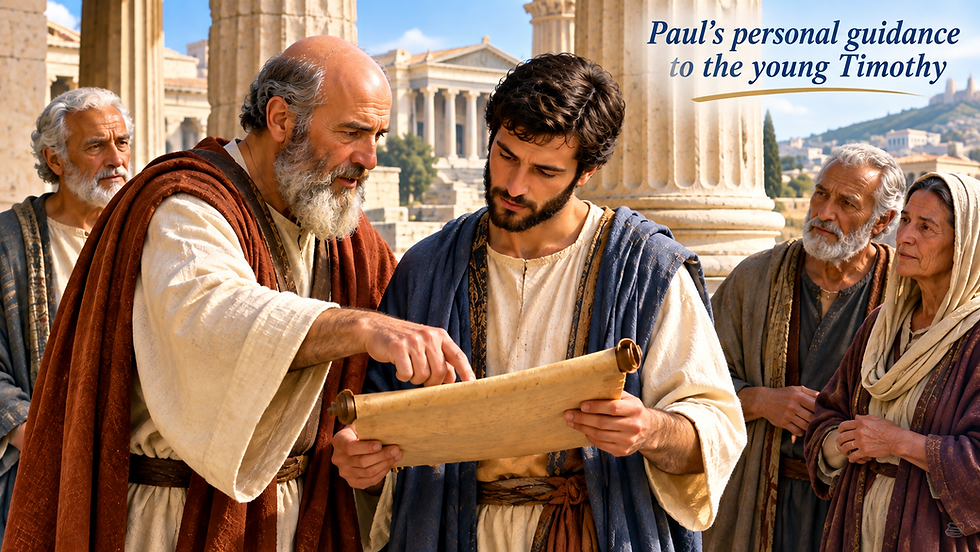
1. In this chapter, Paul continues to give Timothy guidance in organizing and overseeing a church.
2. In 1st Timothy 3:14 -15, he wrote: “I am writing you these instructions …so you will know how people ought to conduct themselves in God’s household, which is the church of the living God…”
a. By calling us God’s household, he is reaffirming that in God’s eyes we are supposed to be like one large family.
b. That is where 1st Timothy 5 begins.
A. Consider some of the implications of the Christian church being treated like a family.
1. To begin with, 1st Timothy 5:1-2 reminds us that no family is perfect. Therefore, older men should always be treated with respect. If you feel an older man needs to be corrected, “exhort him as if he were your father. Treat younger men as brothers, older women as mothers, and younger women as sisters, with absolute purity.”
2. That is probably why priests in the Roman Catholic faith are always addressed as if they were fathers. While Protestants use terms like pastor, the same concept applies.
a. I have always encouraged the people in my flock to address me as “Pastor” because a pastor caring for his sheep is pretty close to being like a father caring for his children.
b. The older I get, the more truth there is in this comparison. Many people over the years have come to think of me as a loving grandfather who does his best to treat those under my care with love and kindness.

3. Obviously, Christian leaders are not to abuse their relationship with those under them. I’m sure that is why our passage says all relationships in a church should be handled with “absolute purity.”
a. Please observe, our passage was not just addressing pastors although we should definitely set the example. It was encouraging all of you to think of those worshiping with you as your brothers and sisters in Christ.
b. In fact, that kind of love and friendship is exactly what draws others to come. In contrast, from my exper-ience over the years, when churches get caught up in squabbles over various issues, visitors pick up on that very quickly and that is often why they choose to move on.
4. So we all must always remember who we are and act accordingly.
B. Secondly, 1st Timothy 5 says a lot about widows.
1. In Paul’s day, widows had a very hard time taking care of themselves. They didn’t have social security like we do here in America. That is why the Holy Spirit led the early church to choose deacons to help care for the poor and the needy (Acts 6:1-7). Often, they had far more people with needs than they could possibly help. That is why Paul spent so much time on this subject in our passage.
2. Consider some of the advice he gave Timothy to pass down to us.
a. Vs. 4 says: “If a widow has children or grand-children, these should learn first of all to put their religion into practice by caring for their own family and so repaying their parents and grandparents, for this is pleasing to God.”
b. Vs.8 goes on to say: “If anyone does not provide for his own relatives and especially his immediate family, he has denied the faith and is worse than an unbeliever.” That is pretty strong language. From my experience, if a widow is poor, her family is probably just as poor. So we must be careful how we judge others.
c. In this context, Paul even encouraged younger widows to remarry ( 1st Timothy 5:14) rather than expose them-selves to temptation or be dependent on others.
3. Finally, after all other options have been considered, if a godly woman still needed help, then the church should do what it could to help. Paul calls these women without family support “real widows” that the church should try to help.
a. Vs. 5 adds: “The widow who is really in need and left all alone puts her hope in God and continues to pray day and night and to ask God for help.”
b. “Praying day and night” is recommended not because one lacks faith, but because she truly has faith. As her need persists, she continues to pray and trust God “to supply all of (her) needs according to His riches in glory in Christ Jesus” (Philippians 4:19).

4. The title of this sermon is called “The Value of Doing What is Right.” That certainly fits what this passage says about widows.
a. Paul says in vs. 10 that the widows who should receive priority, depending on the need, should be “well known for (their) good deeds, such as bringing up children, showing partiality, washing the feet of the saints, helping those in trouble and devoting themselves to all kinds of good deeds.”
b. That actually fits the context in which Philippians 4: 19 was written. It was because they had been so good to Paul in spite of being poor themselves that Paul gave them this promise that God would certainly take care of them if and when the need arose.
C. This fits in nicely with what Paul says in 1st Timothy 5:24-25.
1. Throughout this short letter, Paul has been encouraging godly behavior and warning against the danger of wrong behavior. These verses fit into that setting.
2. He writes: “The sins of some men are obvious, reaching the place of judgment ahead of them. The sins of others trail behind. In the same way, good deeds are obvious, and even those that are not cannot be hidden.”
3. The Bible tells us not to brag about what we give or what we do or even how much we pray. But the Bible also says that “He who sees in secret will reward you openly” (Matt. 6:6). That is a good promise for Christians to claim.

In Conclusion:
1. There are two other matters related to this message that are also worth talking about. The first has to do with the cultural differences between today and back then.
a. Thus we must even consider the differences between all the blessings and resources we have in America compared to many other parts of the world where they have less.
b. In other countries, it is very normal to take care of the older people in one’s family until they die. In our country, nursing homes and retirement homes often become necessary.
c. It can be very expensive even to keep them at home.
2. Secondly, remember what it says in I Tim. 1:12-16 about the salvation Jesus offers even to people like Paul who persecuted Christians before he was saved.
a. As Paul put it, if Jesus could save him, He certainly is willing to save you too. So “when a person came to faith” must always be considered in evaluating his past.
b. If genuine progress has been made, that is what counts when determining who needs help or who might be considered to serve.
3. Finally, since all true Christians are treated in the Bible as our brothers and sisters in the Lord, then we must be considerate of the needs of those in our spiritual family as well as the needs of those in our personal families.
4. This may require a lot of prayer and a lot of wisdom. I’m sure we can trust God to show us what to do. Amen!
If you enjoy the sermon, please click the red heart button to like it, and feel free to comment and share it with others.




Thank you Pastor for your message.
Thank you pastor